Australia Imposes Sanctions on Four Taliban Officials Citing Women’s-Rights Abuses
Canberra enacts travel bans and asset freezes under new sanctions regime to pressure Taliban over repression of Afghan women and girls
Australia has announced it is imposing financial sanctions and travel bans on four senior officials of the Taliban government in Afghanistan, citing their role in what Canberra described as escalating violations of women’s and girls’ rights under Taliban rule.
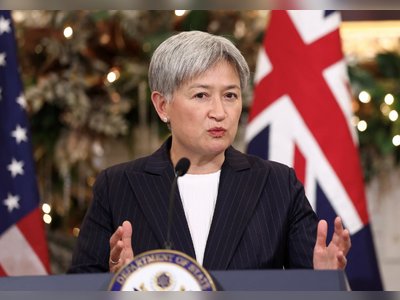
The decision was confirmed on December 6 by Foreign Minister Penny Wong, and comes after Australia expanded its sanctions framework to allow unilateral action against individuals deemed responsible for serious abuses.
The four targeted officials — reported to include three ministers and the Taliban’s chief justice — are accused of enforcing or endorsing policies that deny Afghan women and girls access to education, employment, freedom of movement and public participation.
The sanctions will freeze any assets they hold in Australia and bar them from entering or transiting through the country.
The new penalties are the first concrete action under Australia’s revised sanctions laws, adopted after consultations in late 2025. Human rights groups welcomed the move as a long-awaited step towards accountability, arguing that targeted sanctions can raise the political and financial cost for perpetrators of systemic repression when other legal remedies are unavailable.
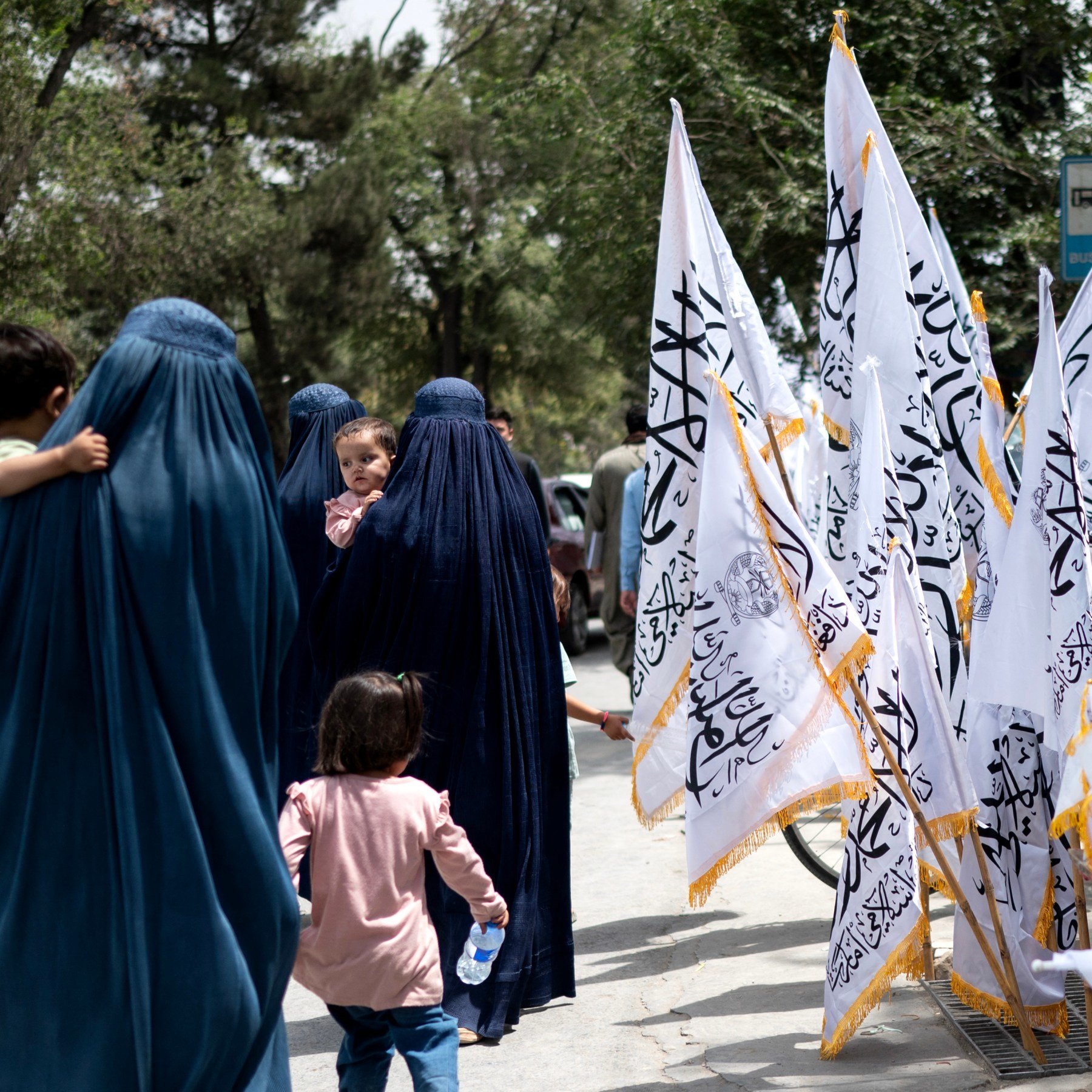
Since seizing power in August 2021, the Taliban have progressively dismantled women’s rights in Afghanistan — shutting down secondary education for girls, prohibiting women from many forms of employment, restricting travel without a male guardian and curtailing public participation.
International observers have repeatedly condemned such actions, with some describing them as gender-based persecution that amounts to crimes against humanity.
By acting unilaterally, Australia joins a small but growing cohort of democratic nations willing to deploy sanctions as a tool to exert pressure on the Taliban regime.
The government said the measure reflects Canberra’s commitment to human rights and its support for Afghan citizens — especially women and girls — who remain under severe oppression.
The sanctions list remains confidential for security reasons, but Washington and European capitals are watching closely, signalling potential further coordinated action if the Taliban do not reverse course.
For now, the move is largely symbolic — its success will depend on whether it deters further abuses, encourages policy change, or galvanises broader international pressure.
Australia appears prepared to use all diplomatic and economic levers at its disposal to highlight that repression of basic rights cannot go unanswered.
The decision was confirmed on December 6 by Foreign Minister Penny Wong, and comes after Australia expanded its sanctions framework to allow unilateral action against individuals deemed responsible for serious abuses.
The four targeted officials — reported to include three ministers and the Taliban’s chief justice — are accused of enforcing or endorsing policies that deny Afghan women and girls access to education, employment, freedom of movement and public participation.
The sanctions will freeze any assets they hold in Australia and bar them from entering or transiting through the country.
The new penalties are the first concrete action under Australia’s revised sanctions laws, adopted after consultations in late 2025. Human rights groups welcomed the move as a long-awaited step towards accountability, arguing that targeted sanctions can raise the political and financial cost for perpetrators of systemic repression when other legal remedies are unavailable.
Since seizing power in August 2021, the Taliban have progressively dismantled women’s rights in Afghanistan — shutting down secondary education for girls, prohibiting women from many forms of employment, restricting travel without a male guardian and curtailing public participation.
International observers have repeatedly condemned such actions, with some describing them as gender-based persecution that amounts to crimes against humanity.
By acting unilaterally, Australia joins a small but growing cohort of democratic nations willing to deploy sanctions as a tool to exert pressure on the Taliban regime.
The government said the measure reflects Canberra’s commitment to human rights and its support for Afghan citizens — especially women and girls — who remain under severe oppression.
The sanctions list remains confidential for security reasons, but Washington and European capitals are watching closely, signalling potential further coordinated action if the Taliban do not reverse course.
For now, the move is largely symbolic — its success will depend on whether it deters further abuses, encourages policy change, or galvanises broader international pressure.
Australia appears prepared to use all diplomatic and economic levers at its disposal to highlight that repression of basic rights cannot go unanswered.
AI Disclaimer: An advanced artificial intelligence (AI) system generated the content of this page on its own. This innovative technology conducts extensive research from a variety of reliable sources, performs rigorous fact-checking and verification, cleans up and balances biased or manipulated content, and presents a minimal factual summary that is just enough yet essential for you to function as an informed and educated citizen. Please keep in mind, however, that this system is an evolving technology, and as a result, the article may contain accidental inaccuracies or errors. We urge you to help us improve our site by reporting any inaccuracies you find using the "Contact Us" link at the bottom of this page. Your helpful feedback helps us improve our system and deliver more precise content. When you find an article of interest here, please look for the full and extensive coverage of this topic in traditional news sources, as they are written by professional journalists that we try to support, not replace. We appreciate your understanding and assistance.