
Australia’s Groundbreaking Ban on Social Media for Under-16s Comes Into Force After Parent Outcry
Nation enacts global-first restriction after parents urged action to shield children from online harms
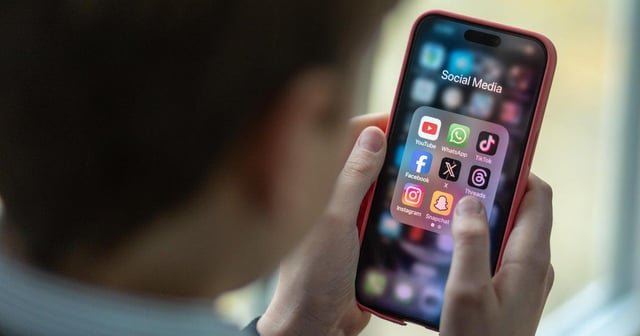
Australia’s first-in-the-world law prohibiting social media use by children under 16 came into force at midnight on December 10, 2025. The sweeping measure requires major platforms — including Facebook, Instagram, TikTok, Snapchat, X (formerly Twitter), YouTube, Reddit, Twitch, Threads and Kick — to disable existing accounts for under-16s and block new ones.
Companies face fines of up to A$ 49.5 million for non-compliance.
The law, enacted via the Online Safety Amendment (Social Media Minimum Age) Act 2024, reflects a strong response to mounting concerns over youth mental health, cyberbullying, and online addiction.
The federal government emphasises that this is not merely a regulatory change but a major cultural shift: children will now have more “time to be kids,” and parents greater peace of mind.
Prime Minister Anthony Albanese described the moment as one of national pride and urged young people to use the upcoming summer break to reconnect with real-life activities: read a book, learn an instrument, play sport or enjoy time with friends and family.
He also encouraged teens or concerned parents to seek support if needed, naming services such as Headspace and Kids Helpline.
The path to the ban was shaped in part by activists and parents — among them mothers who publicly implored lawmakers to “do something” about the rising tide of online harm affecting children.
The government credits that grassroots pressure with creating the political will to deliver the world’s first social-media ban for minors.
Implementation began before the official start date: some platforms started removing underage accounts on December 4. On launch day, concerns emerged over under-16s attempting to circumvent restrictions by using fake birth dates or other workarounds.
The federal eSafety Commissioner has acknowledged these early gaps but pledged that non-compliant accounts will be “booted off in time.”
Supporters argue the legislation is a decisive step to reclaim childhood, counter algorithmic pressure, and protect vulnerable youths — especially those prone to anxiety, depression or low self-esteem.
Critics — including some child-welfare groups — caution that social media can also serve important roles in education, mental-health outreach and peer support.
Even so, the government remains resolute: the law reflects a choice to prioritise the well-being of children over the reach of tech giants, and other countries are already watching closely.
As Australia embarks on what may become a global model for youth online safety, early signs suggest families are bracing for both the practical challenges and the promise of a childhood partially unplugged from social media surveillance and social pressure.
Companies face fines of up to A$ 49.5 million for non-compliance.
The law, enacted via the Online Safety Amendment (Social Media Minimum Age) Act 2024, reflects a strong response to mounting concerns over youth mental health, cyberbullying, and online addiction.
The federal government emphasises that this is not merely a regulatory change but a major cultural shift: children will now have more “time to be kids,” and parents greater peace of mind.
Prime Minister Anthony Albanese described the moment as one of national pride and urged young people to use the upcoming summer break to reconnect with real-life activities: read a book, learn an instrument, play sport or enjoy time with friends and family.
He also encouraged teens or concerned parents to seek support if needed, naming services such as Headspace and Kids Helpline.
The path to the ban was shaped in part by activists and parents — among them mothers who publicly implored lawmakers to “do something” about the rising tide of online harm affecting children.
The government credits that grassroots pressure with creating the political will to deliver the world’s first social-media ban for minors.
Implementation began before the official start date: some platforms started removing underage accounts on December 4. On launch day, concerns emerged over under-16s attempting to circumvent restrictions by using fake birth dates or other workarounds.
The federal eSafety Commissioner has acknowledged these early gaps but pledged that non-compliant accounts will be “booted off in time.”
Supporters argue the legislation is a decisive step to reclaim childhood, counter algorithmic pressure, and protect vulnerable youths — especially those prone to anxiety, depression or low self-esteem.
Critics — including some child-welfare groups — caution that social media can also serve important roles in education, mental-health outreach and peer support.
Even so, the government remains resolute: the law reflects a choice to prioritise the well-being of children over the reach of tech giants, and other countries are already watching closely.
As Australia embarks on what may become a global model for youth online safety, early signs suggest families are bracing for both the practical challenges and the promise of a childhood partially unplugged from social media surveillance and social pressure.
AI Disclaimer: An advanced artificial intelligence (AI) system generated the content of this page on its own. This innovative technology conducts extensive research from a variety of reliable sources, performs rigorous fact-checking and verification, cleans up and balances biased or manipulated content, and presents a minimal factual summary that is just enough yet essential for you to function as an informed and educated citizen. Please keep in mind, however, that this system is an evolving technology, and as a result, the article may contain accidental inaccuracies or errors. We urge you to help us improve our site by reporting any inaccuracies you find using the "Contact Us" link at the bottom of this page. Your helpful feedback helps us improve our system and deliver more precise content. When you find an article of interest here, please look for the full and extensive coverage of this topic in traditional news sources, as they are written by professional journalists that we try to support, not replace. We appreciate your understanding and assistance.