Australia’s sweeping new under-16 social media ban sparks global debate and artistic responses
World-first law banning teens from major platforms inspires both public support and sharp criticism — and fuels satirical commentary such as a new cartoon by Ben Jennings
Australia has formally implemented a landmark law banning individuals under 16 from holding accounts on major social media platforms.
As of December 10, 2025, companies such as Facebook, Instagram, TikTok, YouTube, Snapchat, Reddit, X and others must disable under-16 accounts and block new registrations — or face fines of up to A$49.5 million.
The measure applies to account-holding; platforms typically still permit logged-out content browsing.
The legislation, known as the Social Media Minimum Age law, was passed in late 2024 by the federal parliament and has been hailed by the government as a “world-first” step to protect young people from online harms.
Supporters — including many parents and child-welfare organisations — argue it shields children from harmful content, cyberbullying and the potentially damaging effects of algorithms on mental health.
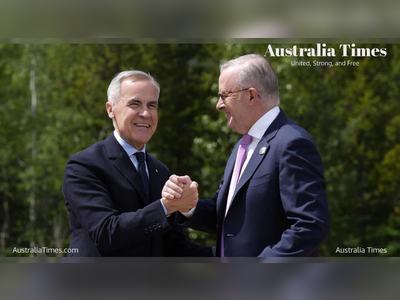
Prime Minister Anthony Albanese urged teenagers to use the holiday period for offline activities like reading, sport or music, rather than social media.
In the days ahead of the deadline, several platforms began proactively removing or suspending accounts for suspected under-16 users.
Meta reportedly deactivated hundreds of thousands of Instagram and Facebook accounts belonging to teens, giving affected users the option to export their data or restore accounts when they turn 16 and pass age verification.
Meanwhile, streaming service YouTube and other platforms warned that the law may paradoxically increase risk for minors, as forced to use less-regulated services or unmonitored corners of the internet.
Reactions among youth, educators and rights groups have been mixed.
Some young people say the ban will cut them off from friends and online communities; others hope it encourages healthier offline habits.
Legal and civil-liberties advocates have raised constitutional, privacy and rights-of-expression concerns — a formal challenge against the law is already before the High Court of Australia, supported by a coalition of teenagers and youth-rights organisations.
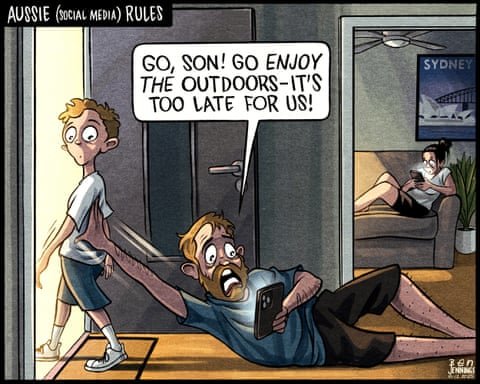
Among the cultural responses to the law is a new cartoon by satirist Ben Jennings, which quickly gained attention.
The illustration — widely shared on social media and in online commentary — depicts a young teenager standing dejectedly outside a locked gate labelled “Social Media Club (16+)”, scrolling on a phone under a “Sorry” sign.
The image captures the tension at the heart of the debate: a measure intended to offer protection, yet raising questions over exclusion, freedom and the evolving nature of digital childhood in the age of regulation.
As Australia embarks on this bold regulatory experiment, other nations — including several in Europe and North America — are watching closely.
The outcomes of this law’s implementation, and the cultural responses it provokes, may help shape future international approaches to online youth safety and digital rights.
As of December 10, 2025, companies such as Facebook, Instagram, TikTok, YouTube, Snapchat, Reddit, X and others must disable under-16 accounts and block new registrations — or face fines of up to A$49.5 million.
The measure applies to account-holding; platforms typically still permit logged-out content browsing.
The legislation, known as the Social Media Minimum Age law, was passed in late 2024 by the federal parliament and has been hailed by the government as a “world-first” step to protect young people from online harms.
Supporters — including many parents and child-welfare organisations — argue it shields children from harmful content, cyberbullying and the potentially damaging effects of algorithms on mental health.
Prime Minister Anthony Albanese urged teenagers to use the holiday period for offline activities like reading, sport or music, rather than social media.
In the days ahead of the deadline, several platforms began proactively removing or suspending accounts for suspected under-16 users.
Meta reportedly deactivated hundreds of thousands of Instagram and Facebook accounts belonging to teens, giving affected users the option to export their data or restore accounts when they turn 16 and pass age verification.
Meanwhile, streaming service YouTube and other platforms warned that the law may paradoxically increase risk for minors, as forced to use less-regulated services or unmonitored corners of the internet.
Reactions among youth, educators and rights groups have been mixed.
Some young people say the ban will cut them off from friends and online communities; others hope it encourages healthier offline habits.
Legal and civil-liberties advocates have raised constitutional, privacy and rights-of-expression concerns — a formal challenge against the law is already before the High Court of Australia, supported by a coalition of teenagers and youth-rights organisations.
Among the cultural responses to the law is a new cartoon by satirist Ben Jennings, which quickly gained attention.
The illustration — widely shared on social media and in online commentary — depicts a young teenager standing dejectedly outside a locked gate labelled “Social Media Club (16+)”, scrolling on a phone under a “Sorry” sign.
The image captures the tension at the heart of the debate: a measure intended to offer protection, yet raising questions over exclusion, freedom and the evolving nature of digital childhood in the age of regulation.
As Australia embarks on this bold regulatory experiment, other nations — including several in Europe and North America — are watching closely.
The outcomes of this law’s implementation, and the cultural responses it provokes, may help shape future international approaches to online youth safety and digital rights.
AI Disclaimer: An advanced artificial intelligence (AI) system generated the content of this page on its own. This innovative technology conducts extensive research from a variety of reliable sources, performs rigorous fact-checking and verification, cleans up and balances biased or manipulated content, and presents a minimal factual summary that is just enough yet essential for you to function as an informed and educated citizen. Please keep in mind, however, that this system is an evolving technology, and as a result, the article may contain accidental inaccuracies or errors. We urge you to help us improve our site by reporting any inaccuracies you find using the "Contact Us" link at the bottom of this page. Your helpful feedback helps us improve our system and deliver more precise content. When you find an article of interest here, please look for the full and extensive coverage of this topic in traditional news sources, as they are written by professional journalists that we try to support, not replace. We appreciate your understanding and assistance.