Australia’s under-16 social media ban leaves many teens anxious ahead of holiday break
Major platforms prepare to log out minors from December 10, raising concerns about isolation and mental-health impacts among young users
Australia is poised to implement the world’s first nationwide social-media age ban starting December 10, 2025, a landmark move requiring major tech firms to block under-16s from holding accounts on platforms such as TikTok, Instagram, YouTube, Snapchat, X and Reddit.
Nearly a million teenagers — many entering the long December–January school holiday — will be locked out just days before the break begins.
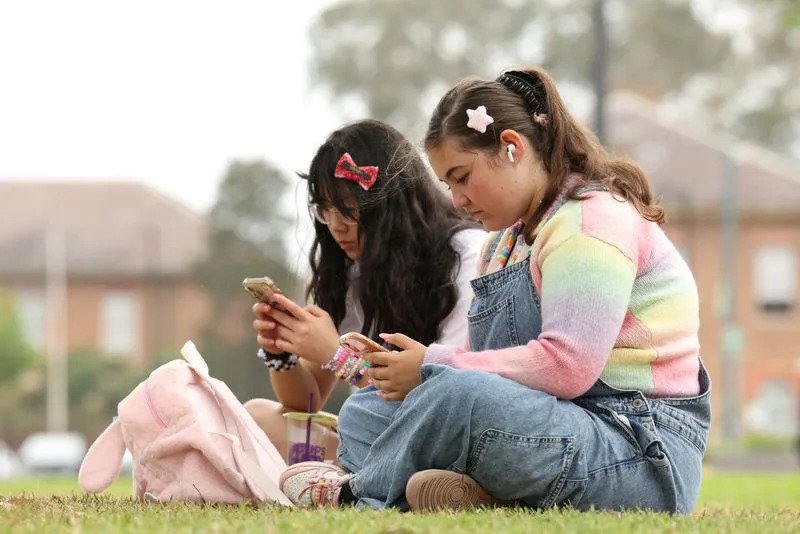
This sudden disruption has sparked fear among many youths of increased loneliness, isolation and anxiety during a period when school-based routines and peer support are paused.
Fifteen-year-old Sydney girl Ayris Tolson described her situation as “Christmas unplugged.” Although she initially welcomed time with family, she admitted she expects to feel increasingly “alone” as days pass without her usual social media contacts.
For many teens, social platforms have become critical for connection, identity and emotional support — especially those from remote areas, marginalized communities, or with little access to offline social networks.
Under the new Online Safety Amendment (Social Media Minimum Age) Act 2024, social-media firms must take “reasonable steps” to prevent under-16s from retaining or creating accounts, with non-compliance carrying fines as high as A$50 million.
Some major platforms, including Meta (owner of Facebook, Instagram and Threads), began shutting down underage accounts on December 4. Other firms such as TikTok, YouTube and Snapchat have signalled their intent to comply by the enforcement date.
In many cases, affected users are warned ahead of time and given the option to download their data before logout.
Though the government frames the ban as a protective measure — removing teens from online harms, addiction risks and harmful content — mental-health professionals warn that the timing may exacerbate rather than alleviate anxiety.
The period immediately following the ban coincides with the longest school holidays of the year.
Without the structure of school and peer interaction, many adolescents could feel socially adrift.
There are concerns in particular for teenagers who have relied on online communities for connection, support or affirmation.
Some parents, educators and community organisations are preparing for a surge in demand for mental-health support.
Hotlines such as Headspace and Kids Helpline — which already provide support to hundreds of thousands of youths — are scaling up outreach and counselling services in anticipation of increased anxiety, loneliness or withdrawal among teens.
Supporters of the law argue that it will encourage young Australians to invest more time in real-world activities — sports, hobbies, face-to-face social interaction — which may foster healthier habits and reduce online dependency.
However, critics warn that banning access altogether risks pushing under-16s toward unregulated corners of the internet, or prompting them to adopt workarounds such as VPNs or fake profiles, potentially undermining the law’s protective intent.
As the ban comes into full force, Australia embarks on what may become a global precedent.
The experience of these first few weeks, especially over the holiday period, is likely to influence international debates about whether strict age-gating — rather than content moderation or digital education — is the right approach to youth online safety.
Nearly a million teenagers — many entering the long December–January school holiday — will be locked out just days before the break begins.
This sudden disruption has sparked fear among many youths of increased loneliness, isolation and anxiety during a period when school-based routines and peer support are paused.
Fifteen-year-old Sydney girl Ayris Tolson described her situation as “Christmas unplugged.” Although she initially welcomed time with family, she admitted she expects to feel increasingly “alone” as days pass without her usual social media contacts.
For many teens, social platforms have become critical for connection, identity and emotional support — especially those from remote areas, marginalized communities, or with little access to offline social networks.
Under the new Online Safety Amendment (Social Media Minimum Age) Act 2024, social-media firms must take “reasonable steps” to prevent under-16s from retaining or creating accounts, with non-compliance carrying fines as high as A$50 million.
Some major platforms, including Meta (owner of Facebook, Instagram and Threads), began shutting down underage accounts on December 4. Other firms such as TikTok, YouTube and Snapchat have signalled their intent to comply by the enforcement date.
In many cases, affected users are warned ahead of time and given the option to download their data before logout.
Though the government frames the ban as a protective measure — removing teens from online harms, addiction risks and harmful content — mental-health professionals warn that the timing may exacerbate rather than alleviate anxiety.
The period immediately following the ban coincides with the longest school holidays of the year.
Without the structure of school and peer interaction, many adolescents could feel socially adrift.
There are concerns in particular for teenagers who have relied on online communities for connection, support or affirmation.
Some parents, educators and community organisations are preparing for a surge in demand for mental-health support.
Hotlines such as Headspace and Kids Helpline — which already provide support to hundreds of thousands of youths — are scaling up outreach and counselling services in anticipation of increased anxiety, loneliness or withdrawal among teens.
Supporters of the law argue that it will encourage young Australians to invest more time in real-world activities — sports, hobbies, face-to-face social interaction — which may foster healthier habits and reduce online dependency.
However, critics warn that banning access altogether risks pushing under-16s toward unregulated corners of the internet, or prompting them to adopt workarounds such as VPNs or fake profiles, potentially undermining the law’s protective intent.
As the ban comes into full force, Australia embarks on what may become a global precedent.
The experience of these first few weeks, especially over the holiday period, is likely to influence international debates about whether strict age-gating — rather than content moderation or digital education — is the right approach to youth online safety.
AI Disclaimer: An advanced artificial intelligence (AI) system generated the content of this page on its own. This innovative technology conducts extensive research from a variety of reliable sources, performs rigorous fact-checking and verification, cleans up and balances biased or manipulated content, and presents a minimal factual summary that is just enough yet essential for you to function as an informed and educated citizen. Please keep in mind, however, that this system is an evolving technology, and as a result, the article may contain accidental inaccuracies or errors. We urge you to help us improve our site by reporting any inaccuracies you find using the "Contact Us" link at the bottom of this page. Your helpful feedback helps us improve our system and deliver more precise content. When you find an article of interest here, please look for the full and extensive coverage of this topic in traditional news sources, as they are written by professional journalists that we try to support, not replace. We appreciate your understanding and assistance.