
Australia to Become First Foreign Operator of U.S. AIM-260A JATM Missile in Landmark Defence Deal
Deal approved to supply 450 next-generation long-range air-to-air missiles to Royal Australian Air Force, cementing deeper US–Australia security cooperation
The United States has approved the first foreign sale of the next-generation AIM-260A Joint Advanced Tactical Missile (JATM) to Australia, paving the way for the Royal Australian Air Force to become the first international force to employ the advanced air-to-air weapon.
The agreement includes 450 missiles, five test missiles and 30 guided test vehicles, at a total estimated cost of US$2.6 billion (rising to US$3.1 billion when including associated support and non-major defense equipment).
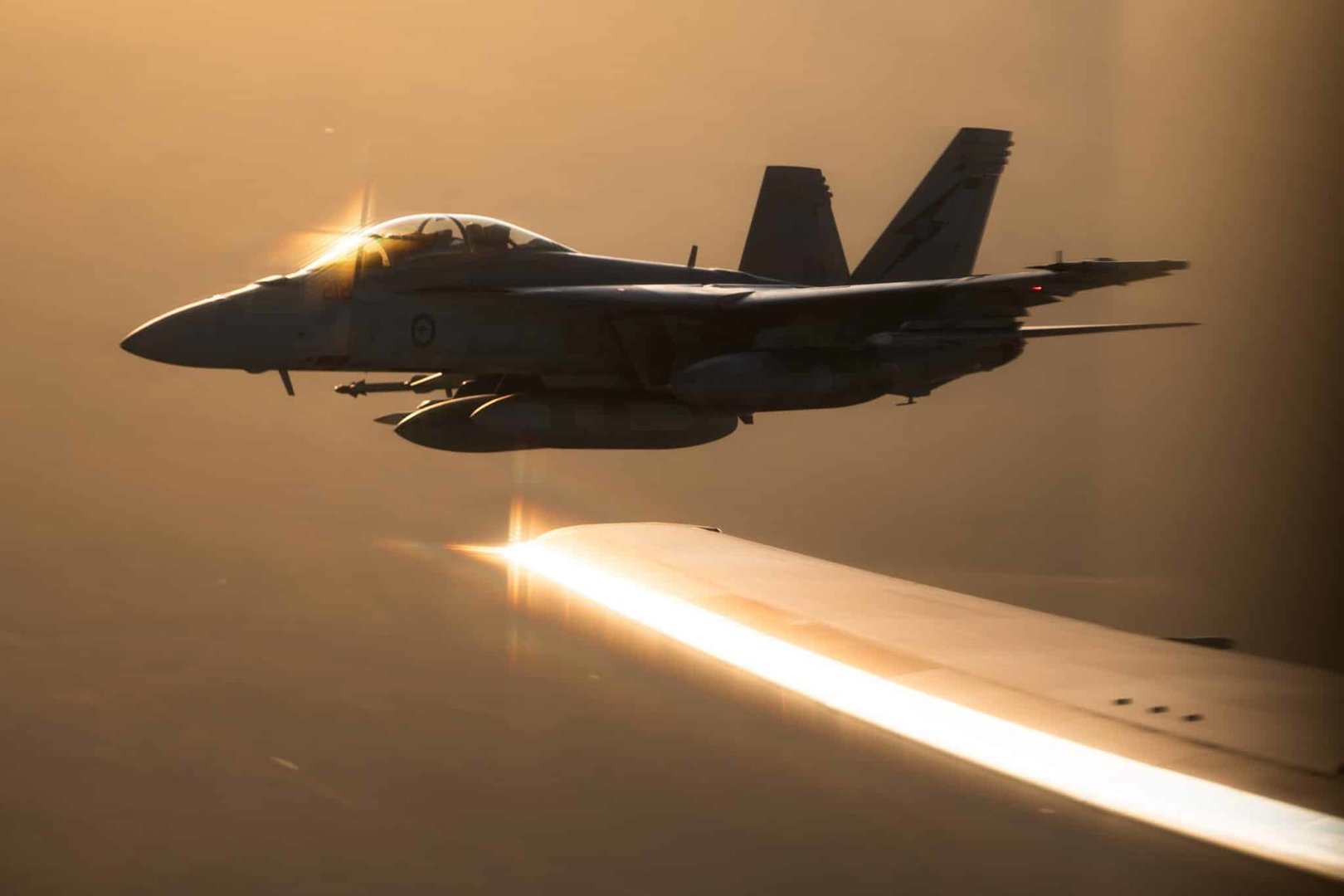
Under the deal, Australia’s fleet of F/A-18F Super Hornets and F-35A Lightning IIs will be configured to carry JATM — marking a significant upgrade to the country’s air-force capabilities and deepening Canberra’s strategic alignment with Washington amid shifting defence dynamics in the Indo-Pacific.
The formal sale was notified to the U.S. Congress in September, and final approval is expected imminently after defence-agency, State-Department and congressional reviews reportedly raised no objections.
The AIM-260A, developed by Lockheed Martin, has been under development since 2017 and has only recently begun transitioning from classified testing to limited procurement.
Live-fire trials by the U.S. Navy’s VX-31 testing squadron in 2024 and early 2025 confirmed performance under operational conditions, prompting both the U.S. Navy and U.S. Air Force to allocate procurement funding for the Fiscal Year 2026 budget.
Though the JATM remains officially non-operational in U.S. service across all platforms, insiders indicate the missile shows great promise.
It is widely expected to surpass the range and capability of the legacy AIM-120 AMRAAM missile, with performance estimates suggesting it could engage targets at distances significantly beyond 200 kilometres.
Its design — similar in dimensions to the AMRAAM — allows it to integrate with existing internal weapon bays of stealth fighters, preserving their low observable profile.
Analysts view the approval of the export as a milestone not only for Australia’s defence posture but also for broader U.S.–led regional deterrence in the Indo-Pacific.
With growing interest from other U.S. allies who already operate the newer AIM-120D-3 variant, the export clearance signals a willingness in Washington to share advanced capabilities with partners.
It also underscores Canberra’s rising role in shaping regional air-power balances.
Under current U.S. production timelines, the first delivery of AIM-260A missiles to Australia is slated for the third quarter of 2033 — reflecting the balancing act between U.S. inventory requirements and foreign sales priorities.
Despite the long wait, the sale marks a foundational step in preparing Australia’s air force for next-generation high-altitude and beyond-visual-range aerial conflict scenarios.
The agreement includes 450 missiles, five test missiles and 30 guided test vehicles, at a total estimated cost of US$2.6 billion (rising to US$3.1 billion when including associated support and non-major defense equipment).
Under the deal, Australia’s fleet of F/A-18F Super Hornets and F-35A Lightning IIs will be configured to carry JATM — marking a significant upgrade to the country’s air-force capabilities and deepening Canberra’s strategic alignment with Washington amid shifting defence dynamics in the Indo-Pacific.
The formal sale was notified to the U.S. Congress in September, and final approval is expected imminently after defence-agency, State-Department and congressional reviews reportedly raised no objections.
The AIM-260A, developed by Lockheed Martin, has been under development since 2017 and has only recently begun transitioning from classified testing to limited procurement.
Live-fire trials by the U.S. Navy’s VX-31 testing squadron in 2024 and early 2025 confirmed performance under operational conditions, prompting both the U.S. Navy and U.S. Air Force to allocate procurement funding for the Fiscal Year 2026 budget.
Though the JATM remains officially non-operational in U.S. service across all platforms, insiders indicate the missile shows great promise.
It is widely expected to surpass the range and capability of the legacy AIM-120 AMRAAM missile, with performance estimates suggesting it could engage targets at distances significantly beyond 200 kilometres.
Its design — similar in dimensions to the AMRAAM — allows it to integrate with existing internal weapon bays of stealth fighters, preserving their low observable profile.
Analysts view the approval of the export as a milestone not only for Australia’s defence posture but also for broader U.S.–led regional deterrence in the Indo-Pacific.
With growing interest from other U.S. allies who already operate the newer AIM-120D-3 variant, the export clearance signals a willingness in Washington to share advanced capabilities with partners.
It also underscores Canberra’s rising role in shaping regional air-power balances.
Under current U.S. production timelines, the first delivery of AIM-260A missiles to Australia is slated for the third quarter of 2033 — reflecting the balancing act between U.S. inventory requirements and foreign sales priorities.
Despite the long wait, the sale marks a foundational step in preparing Australia’s air force for next-generation high-altitude and beyond-visual-range aerial conflict scenarios.
AI Disclaimer: An advanced artificial intelligence (AI) system generated the content of this page on its own. This innovative technology conducts extensive research from a variety of reliable sources, performs rigorous fact-checking and verification, cleans up and balances biased or manipulated content, and presents a minimal factual summary that is just enough yet essential for you to function as an informed and educated citizen. Please keep in mind, however, that this system is an evolving technology, and as a result, the article may contain accidental inaccuracies or errors. We urge you to help us improve our site by reporting any inaccuracies you find using the "Contact Us" link at the bottom of this page. Your helpful feedback helps us improve our system and deliver more precise content. When you find an article of interest here, please look for the full and extensive coverage of this topic in traditional news sources, as they are written by professional journalists that we try to support, not replace. We appreciate your understanding and assistance.