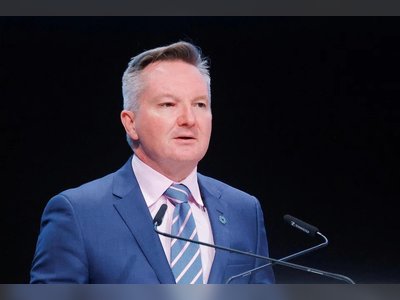
Australian Politician Warns Nation Is Test Case for Global Online Censorship Debate
Opposition voices cast Australia’s world-first social media ban for under-16s as a cautionary precedent amid free speech concerns
Australia’s emerging world-first social media ban for users under the age of sixteen has drawn sharp political scrutiny, with at least one senior opposition figure arguing the nation risks becoming a test case for expanded online censorship.
The federal government passed legislation late last year that will require major social media platforms to prevent Australians younger than sixteen from creating or holding accounts, a move the Albanese administration says is aimed at protecting the mental health and safety of children.
The law will come into force at the end of this year as platforms are required to put in place age verification measures with significant penalties for non-compliance.
Support for the policy among the Australian public is reported to be high, with past surveys indicating a clear majority backing restrictions on children’s social media use.
Tech giants including Meta and Google have sharply criticised the approach, arguing that it amounts to overreach and could have unintended consequences for freedom of expression and online engagement.
Elon Musk, owner of X, described the policy as a path to “control access to the internet,” framing the legislation as a form of broader censorship.
Some legal experts and civil liberties advocates have suggested that the ban’s implementation may face challenges related to constitutional considerations around political communication and free speech, though such challenges are expected to be difficult to pursue.
Amid these debates, opposition lawmakers have articulated concerns that Australia is effectively serving as a “guinea pig” for a new era of digital regulation that could inspire similar measures elsewhere, potentially reshaping global norms around online speech and state power.
Communications Minister Anika Wells has defended the policy as a necessary protective measure, and Prime Minister Anthony Albanese has reiterated that safeguarding young Australians is a central priority, even as the nation navigates the complexities of enforcing such sweeping rules in an increasingly digital society.
The federal government passed legislation late last year that will require major social media platforms to prevent Australians younger than sixteen from creating or holding accounts, a move the Albanese administration says is aimed at protecting the mental health and safety of children.
The law will come into force at the end of this year as platforms are required to put in place age verification measures with significant penalties for non-compliance.
Support for the policy among the Australian public is reported to be high, with past surveys indicating a clear majority backing restrictions on children’s social media use.
Tech giants including Meta and Google have sharply criticised the approach, arguing that it amounts to overreach and could have unintended consequences for freedom of expression and online engagement.
Elon Musk, owner of X, described the policy as a path to “control access to the internet,” framing the legislation as a form of broader censorship.
Some legal experts and civil liberties advocates have suggested that the ban’s implementation may face challenges related to constitutional considerations around political communication and free speech, though such challenges are expected to be difficult to pursue.
Amid these debates, opposition lawmakers have articulated concerns that Australia is effectively serving as a “guinea pig” for a new era of digital regulation that could inspire similar measures elsewhere, potentially reshaping global norms around online speech and state power.
Communications Minister Anika Wells has defended the policy as a necessary protective measure, and Prime Minister Anthony Albanese has reiterated that safeguarding young Australians is a central priority, even as the nation navigates the complexities of enforcing such sweeping rules in an increasingly digital society.
AI Disclaimer: An advanced artificial intelligence (AI) system generated the content of this page on its own. This innovative technology conducts extensive research from a variety of reliable sources, performs rigorous fact-checking and verification, cleans up and balances biased or manipulated content, and presents a minimal factual summary that is just enough yet essential for you to function as an informed and educated citizen. Please keep in mind, however, that this system is an evolving technology, and as a result, the article may contain accidental inaccuracies or errors. We urge you to help us improve our site by reporting any inaccuracies you find using the "Contact Us" link at the bottom of this page. Your helpful feedback helps us improve our system and deliver more precise content. When you find an article of interest here, please look for the full and extensive coverage of this topic in traditional news sources, as they are written by professional journalists that we try to support, not replace. We appreciate your understanding and assistance.