
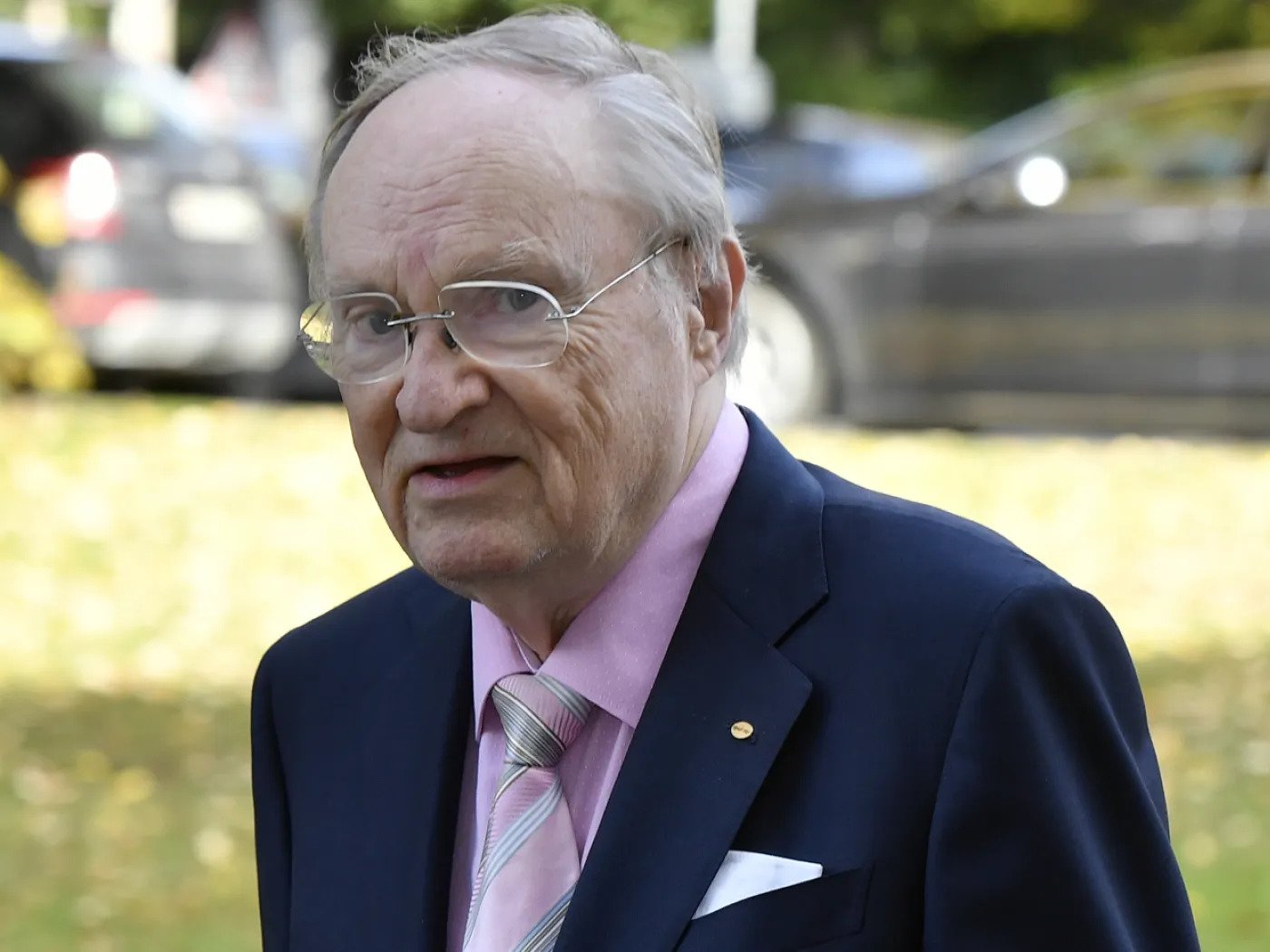
Founder of Swiss Right-to-Die Charity Ends His Life at Own Clinic Days Before Turning 93
Ludwig Minelli, founder of Dignitas, chose voluntary assisted dying at his own facility; organisation vows to continue his legacy.
Ludwig Minelli, the Swiss lawyer who founded the right-to-die charity Dignitas, ended his life at one of the clinics established by the organisation on 29 November 2025 — just days before what would have been his ninety-third birthday.
His death by voluntary assisted dying was confirmed by Dignitas, which described him as a “pioneer and warrior” for self-determination at the end of life.
Minelli began his professional life as a journalist in 1956 but retrained as a lawyer in 1977, earning a degree in law by 1981. In 1998 he established Dignitas — full name “Dignitas – To live with dignity.
To die with dignity.” — with the explicit aim of enabling terminally ill or chronically suffering individuals, including non-Swiss citizens, to end their lives on their own terms.
Since its founding, the organisation has assisted more than four thousand people to die, and counts over 10,000 members around the world.
In its public tribute, Dignitas said that until his final moments Minelli “continued to seek additional ways to help people realise their right to freedom of choice and self-determination in their ‘final matters’ — and often he found them.” The group affirmed it will continue to operate and develop according to his wishes, preserving his commitment as both a human-rights advocate and legal strategist.
Minelli’s career was long marked by legal and societal challenges.
Over decades, he fought in Swiss courts and at the European Court of Human Rights to defend what he viewed as individual autonomy over when and how to die.
Under Swiss law, assisted suicide has generally been permitted if the person undertaking the act does so voluntarily, without “selfish motives” by those assisting.
The method embraced by Dignitas — and chosen by Minelli for himself — is not active euthanasia; rather, the individual takes the final step voluntarily, after thorough medical and psychiatric review, and in full awareness.
For decades Dignitas has also offered counselling, palliative-care advice, and legal support for end-of-life decision-making.
Minelli often argued publicly that the right to a dignified death is among the last fundamental human rights.
Though his views occasionally sparked controversy — especially when he suggested loosening eligibility criteria — his legal battles and the organisation he built profoundly shaped the global debate on assisted dying.
With his death, Dignitas faces a new chapter.
But by committing himself to the same process he helped formalise, Minelli made a final — and unmistakable — statement of faith in self-determination.
The organisation now prepares to carry forward his work, under the guiding principles he championed until the end.
AI Disclaimer: An advanced artificial intelligence (AI) system generated the content of this page on its own. This innovative technology conducts extensive research from a variety of reliable sources, performs rigorous fact-checking and verification, cleans up and balances biased or manipulated content, and presents a minimal factual summary that is just enough yet essential for you to function as an informed and educated citizen. Please keep in mind, however, that this system is an evolving technology, and as a result, the article may contain accidental inaccuracies or errors. We urge you to help us improve our site by reporting any inaccuracies you find using the "Contact Us" link at the bottom of this page. Your helpful feedback helps us improve our system and deliver more precise content. When you find an article of interest here, please look for the full and extensive coverage of this topic in traditional news sources, as they are written by professional journalists that we try to support, not replace. We appreciate your understanding and assistance.